
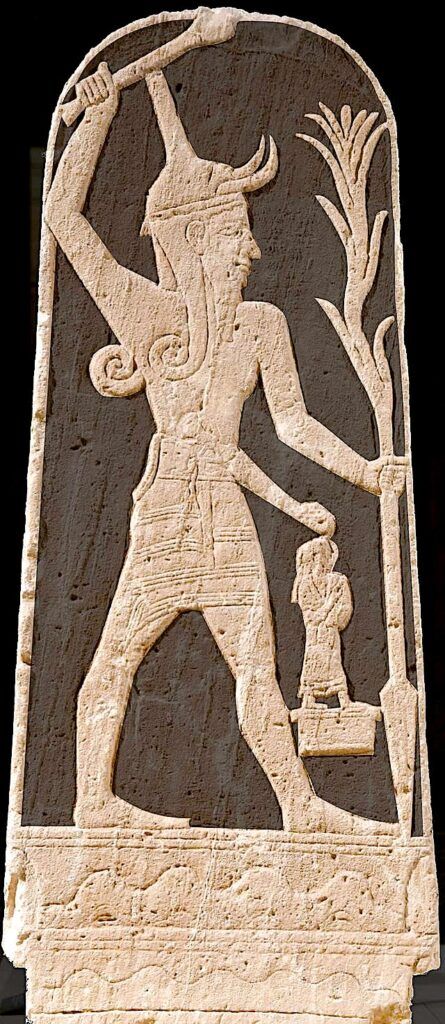
On the internet, it is common to find magicians offering pacts and agreements with Baal in exchange for wealth and prosperity; Baal has ceased to be seen as the demon of flies and of child sacrifice, and has become the demon of money, of the elite, and of power. Yet when these magicians are asked who Baal is, they reply: “he is the god of the harvest, of fertility, of crops.” But why has a harvest god become one of the greatest — if not the greatest — symbols of wealth today?
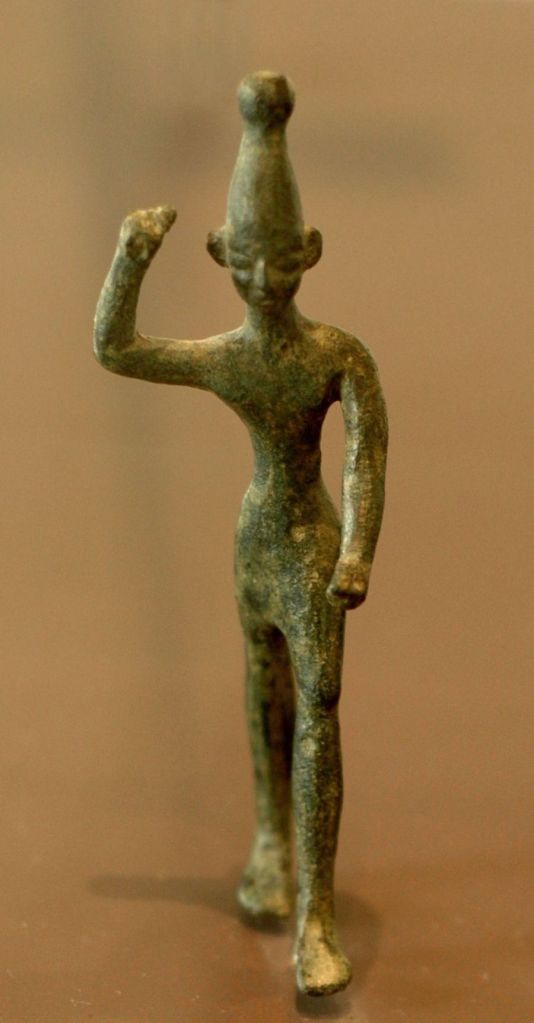
The Semitic word baʿal means roughly “lord,” “master,” “owner,” or “husband.” For this reason, “Baal” did not originally function as the name of a single universal deity. Different deities could receive the title of Baal, “Lord,” and so we find different Baalim in different regions and periods.
Among them, two of the most important were Baal-Hadad, especially known in Syria and Canaan, and Baal-Hammon, who became one of the principal deities of the Punic world, especially in Carthage.
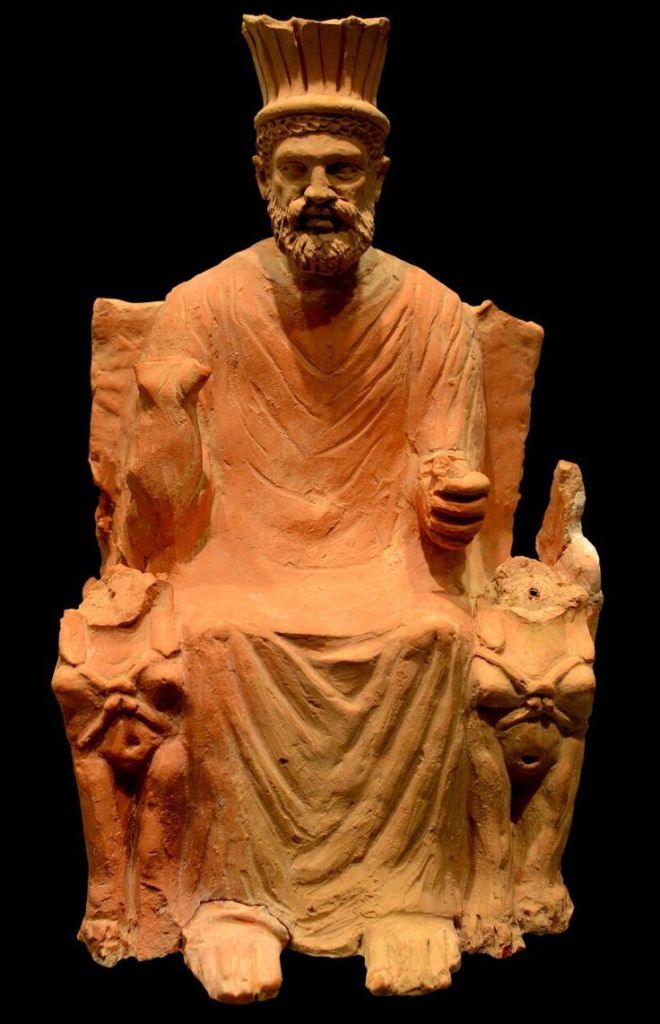
Baal Hadad and Baal Hammon were the principal Baalim gods of history; Hadad began his cult in Canaan and Ugarit around 2500 BCE, and Hammon in Carthage from c. the 9th/8th century BCE onward. Baal Hadad was worshipped as a god of lightning, rain, thunderbolts, fertility, harvests, and crops — a god who influenced the seasons, who took part in wars, who could heal the wounded, and who could even participate in the cult of the dead. Over so many years of worship, the god Hadad received countless titles and attributions. Baal Hammon, for his part, was the supreme god of Carthage and of Punic civilization, associated with the sky, fertility, the sun, and vegetation. His consort Tanit was the goddess of the moon, fertility, motherhood, and war, often called the Face of Baal (Pene Baal). Together, Baal Hammon and Tanit were the supreme deities of Punic civilization and of certain peoples of North Africa.
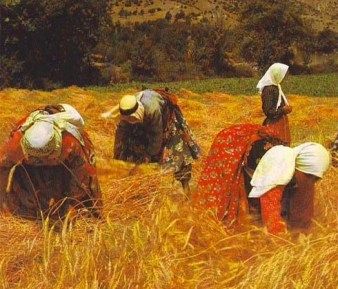
Agriculture was fundamental to the survival, economy, social organization, and religion of the peoples who worshipped Baal Hadad and Baal Hammon, especially in regions dependent on seasonal rainfall (rain-fed or “baali” agriculture), rather than on river irrigation as in Egypt or southern Mesopotamia. The Baal Cycle, written for Baal Hadad, and its Sacred Theater represent the seasons of the year in mythological form: in summer, Hadad reigns in sovereignty; in autumn, he descends to the underworld and weakens; in winter, he dies (or disappears); in spring, he resurrects. This journey of Baal represents the fertility and abundance of summer and spring, and the threat of famine in autumn and winter.
In the context of the cult of Baal Hammon, agriculture sustained the city, fed the army, generated taxes, and financed trade and naval power. Carthage became an important exporter of grain and olive oil. Its advanced techniques included iron ploughs, crop rotation, irrigation where possible, and innovations such as the plostellum Punicum (a threshing machine). The treatise of Mago (some 28 books, 4th–3rd centuries BCE), preserved and translated by the Romans after the destruction of Carthage in 146 BCE, bears witness to Punic agronomic sophistication: estate management, the cultivation of olive trees and vineyards, animal husbandry, beekeeping, and the organization of labor (slaves and tenant farmers).
Offerings to the Baalim gods included, in the cult of Baal Hadad, portions of the seasonal harvest — especially the firstfruits of grain, wine, olive oil, and other agricultural products — as well as animals and libations. These offerings were destined for the temples and the cult of the god, who deserved a share of what the land produced in the eyes of his faithful. In Ugarit, the king played a central role in the rituals and frequently received or controlled the tithes of the villages, redistributing part of them to officials, priests, and the temple. The priests and the cult personnel were sustained by these offerings, and part of them was consumed in ritual banquets (sometimes communal ones).
In the cult of Baal Hammon, children — generally very young — could be offered in sacrifice (molk) to the god (often together with Tanit), above all in fulfillment of vows or in periods of grave crisis (war, plague, or calamity). Classical sources and the stelae of the tophets indicate that the rite involved both elite families (nobles, magistrates, and priests) and, to a lesser extent, ordinary people. The principal aim was to propitiate the god for the benefit of the family, the city, or the community as a whole, and not exclusively for monarchs or people of great power. In some cases, animals were used as substitutes.
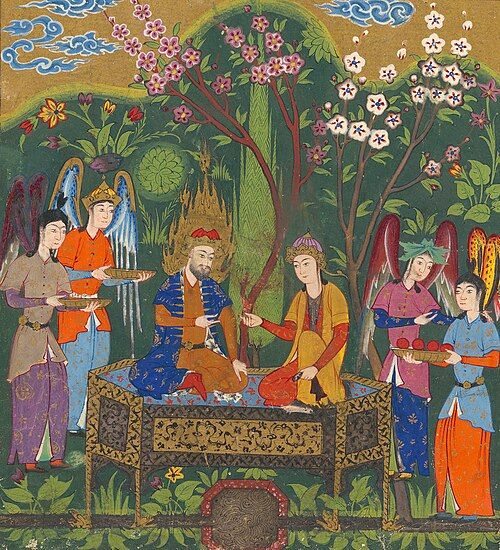
In Islam, the fall of Adam (Ādam) and Eve (Ḥawwā’) occurs through the disobedience of eating from the forbidden tree in Paradise (Jannah), followed by the descent to Earth, where humanity comes to live through its own labor. The Qur’an does not specify the type of tree or fruit, but various traditions frequently associate it with wheat (or grain/cereal), a staple food whose production process requires constant labor and takes a long time to complete. And this symbolizes the beginning of agriculture as a means of sustenance.
On Earth, Adam and Eve learn to cultivate the land, raise animals, and build a dwelling. Traditions (including popular accounts and epics such as the Bengali Nabi Bansa) say that Gabriel taught them to plough, sow, cultivate wheat, and perform other activities important to life on Earth. Man’s survival, from the fall of Adam onward, comes to be sustained by his own labor, and not by Allah, who gave them food and a good life without demanding any effort.
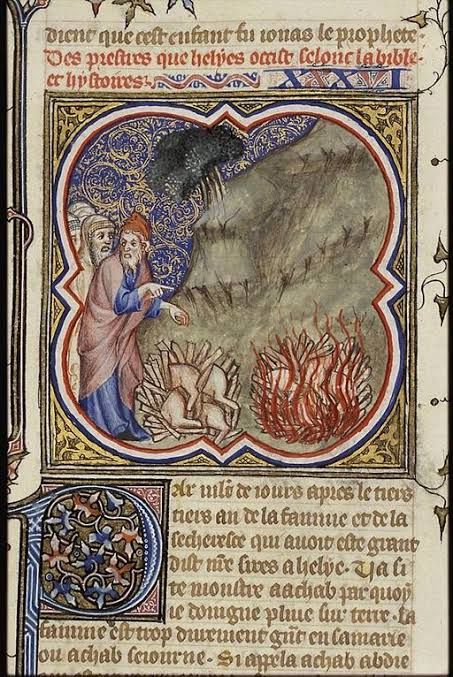
In the Hebrew Bible (Old Testament), Baal appears as the principal rival of Yahweh and as a symbol of idolatry. In the New Testament, the form Beelzebub (or Beelzebul) appears as a designation of the “prince of demons” (Matthew 12:24; Mark 3:22), consolidating the demonization of the name. Baal is cited between 90 and 100 times in the Bible. The god Baal symbolized everything that Israelite monotheism considered abominable, yet there was still syncretism between Baal and Yahweh: Yahweh, originally associated with desert traditions, with war and liberation, came to absorb characteristics of Baal in order to respond to the needs of sedentary life: rain, the fertility of the land, and agricultural prosperity. There were even Jews who called Yahweh Baal.
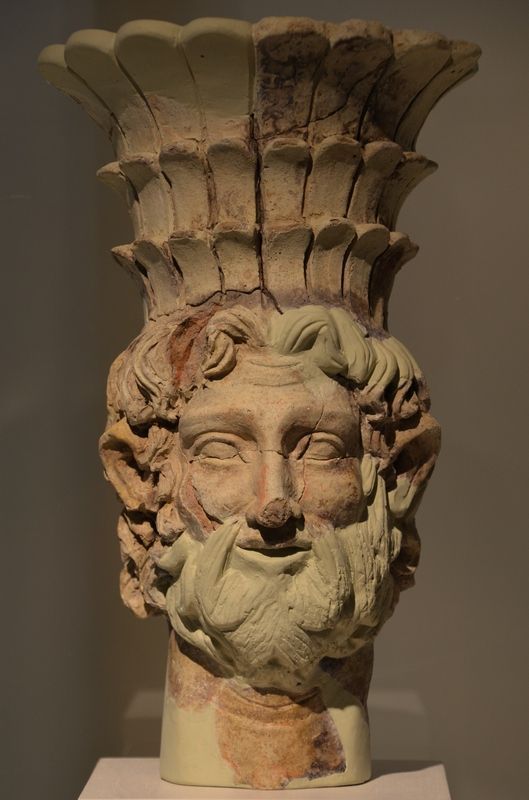
In the Middle Ages, Baal (or Beelzebub) was placed by the Catholic Church as a demon of great power in hell, occupying high hierarchical positions as prince and king. In the grimoires of magic written in the Middle Ages, Baal granted the power of invisibility, and in some sources also wisdom and knowledge of the sciences, favors, and, at times, love. Although he is not associated with abundance, prosperity, and wealth in these grimoires, many associate him with — and perform magical workings with — Baal in order to obtain such things.
Baal’s agricultural prosperity extended into infinite areas. The god who was called upon to open the windows of his celestial castle to bring the rain is now called upon to open his windows to help various people obtain assistance in 1001 branches of prosperity.
 Shams Bael - 𐎁𐎓𐎍
Leave a comment