
Almost everyone has heard the term “Haitian vodou” at least once. But what is it, really?
Haitian Vodou is a religion born from the meeting of West and Central African spiritual traditions—especially those of the Fon, Yoruba, and Kongo peoples—with the Roman Catholicism imposed by French colonizers. It took shape mainly in the eighteenth century in the colony of Saint-Domingue. The word “Vodou” comes from the Fon term vodun, meaning “spirit” or “deity.”
Unlike the distorted image spread by cinema and popular media under the name “voodoo,” this tradition is not simply “black magic” or dolls pierced with needles. Vodou is far richer and more complex than that.
At the top of the pantheon stands Bondye (“the Good God”), the supreme creator who remains distant from human affairs. Beneath him are the lwa—spirits such as Damballah and Papa Legba—who sustain the world and assist the living. Practitioners, known as sèvitè (“servants of the spirits”), dedicate themselves to sevi lwa: serving the spirits through offerings, prayers, dances, and rituals.
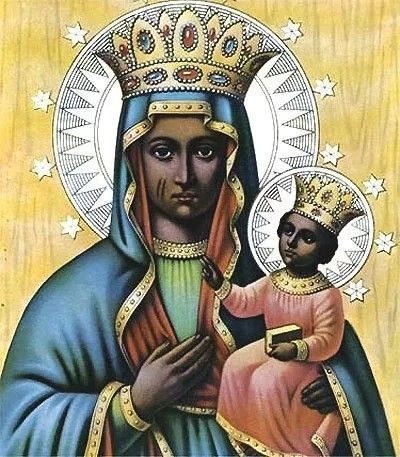
The lwa are organized into “nations” or families. The two main ones are Rada and Petwo. The Rada nation, rooted in Dahomey and Yoruba traditions, includes spirits generally seen as more benevolent, such as Erzulie Freda and Ayida Wedo. The Petwo nation, shaped by the experience of slavery, the Haitian Revolution, and social struggle, is more intense and “hot.” It is associated with force, resistance, and power, as seen in figures like Erzulie Dantor.
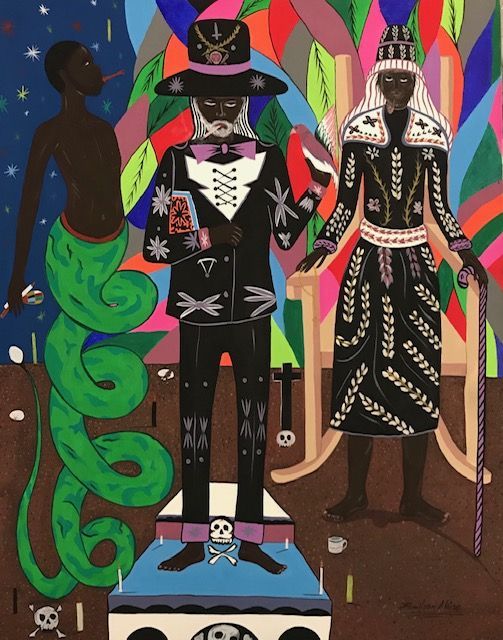
There is also the important Ghede family—the lwa of the dead, the cemetery, and sexuality. Central figures include Baron Samedi, Maman Brigitte, and Gédé Nibo. Within this family one finds spirits of every origin, history, culture, and even different religions. After all, they are the dead, and death makes no distinctions.
Vodou played a fundamental role in the Haitian Revolution (1791–1804), the only successful slave revolt that created an independent state. The ceremony at Bois Caïman in 1791 is widely regarded as a founding moment of that struggle.
Even after independence, Vodou continued to face persecution from elites and the Catholic Church, who dismissed it as superstition and backwardness. Anti-superstition campaigns in the twentieth century tried to eradicate it. Yet Haitian intellectuals such as Jean Price-Mars, in Ainsi parla l’Oncle (1928), reclaimed Vodou as cultural heritage and a legitimate source of national identity—a direct challenge to colonial prejudice. For many practitioners, Christianity is neither a threat nor something to be fought. Many Haitian Vodouists move between both traditions in daily life: they receive baptism in the Church while maintaining the syncretism between the lwa and Catholic saints.
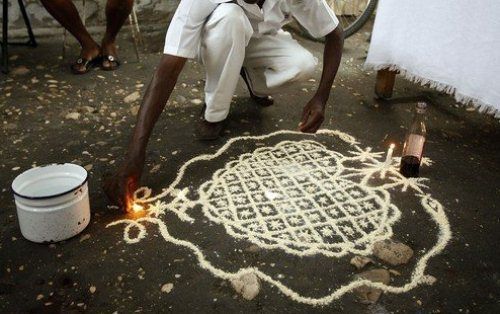
Ceremonies take place in sacred spaces called peristyles, led by houngans (priests) and mambos (priestesses). During these rituals, possession by the lwa occurs. As Maya Deren observed in Divine Horsemen: The Living Gods of Haiti: “In the idiom of spirit possession, the god ‘mounts’ his ‘horse’, a person.” She explained that the initiate does not seek possession as an escape, but as a form of expansion. “The self must leave if the loa is to enter,” allowing the person to become the vehicle through which the divine takes flesh, so the community can witness, touch, and interact with the living presence of the spirits. People turn to Vodou to heal illness, resolve conflicts, protect their families, and face hardship—not merely to harm others, as media portrayals often suggest.
In Dieu dans le vaudou haïtien (translated as God in Haitian Vodou), Laënnec Hurbon emphasizes: “Vodou is a solution of survival for the Haitian people, in that it helps them to become conscious of themselves and to protect themselves against an unhappy existence by refusing the ruptures in the fabric of the world. […] It is not surprising that, despite all persecutions, Vodou has survived in Haiti. In fact, it arrived in the country marked by persecution and was the mode of resistance Black people used against whites.”
Women hold a prominent place in Vodou. Historically, many have led communities and resistance movements—figures such as Cécile Fatiman, who played an active role in the Haitian Revolution, are clear examples. Vodou is one of the few spiritual traditions of the Black Atlantic with institutional gender parity, a striking contrast to the patriarchal structures of the Christian churches present in Haiti.
Throughout the twentieth and twenty-first centuries, Vodou has faced strong international stigmatization, often linked to images of zombification and black magic. Haitian and foreign anthropologists have shown that these portrayals are largely colonial and Hollywood constructions. Above all, Vodou is a religion of life, resilience, and celebration.
Today Vodou is recognized as an intangible cultural heritage of Haiti and forms part of the national identity. In times of crisis, many Haitians turn to it again for protection and meaning. As Hurbon observed, it is the system the Haitian people developed to confront suffering, ease pain, and endure.


Leave a comment