Ezili Freda (Erzili/Erzulie Freda Daomé) is the most well-known and beloved female lwa in Haitian Vodou. She is the lwa of love, luxury, beauty, and femininity, of homosexuals, and of other matters of the heart and glamour.
Practitioners and scholars of Haitian Vodou often associate Ezili Freda with the ancient Kingdom of Dahomey (present-day Benin). According to this tradition, all lwa who bear the name Ezili descend from Azili, water spirits associated with beauty, the feminine, luxury, and jealousy — notably Azili Tobosi and Azili Kaia.
However, some people, such as researcher Joan Dayan in the classic essay “Erzulie: A Women’s History of Haiti,” argue that Ezili has no clear, single African antecedent and that she crystallized in Haiti, primarily under French influence.
I, personally, believe that the Ezili family came from the Azili, but that, like other lwa, they took on a more Haitian character and became something more unique in Haiti.
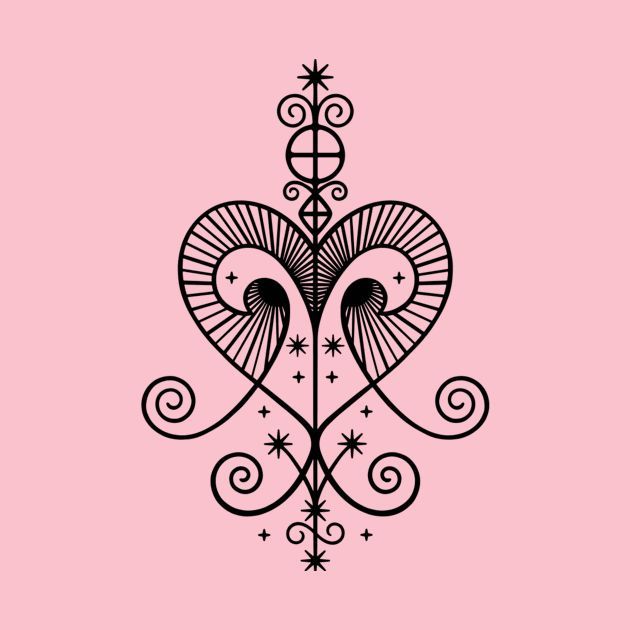
Vèvè
It is somewhat common to hear that Freda behaves like a French noblewoman, that she refuses to speak Creole or to receive things that are “too Haitian,” and many even reduce her to this, calling her spoiled, lazy, crybabyish, and jealous. But of course, this is a great folly.
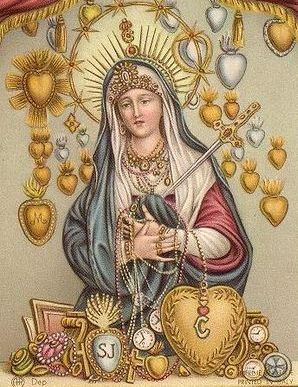
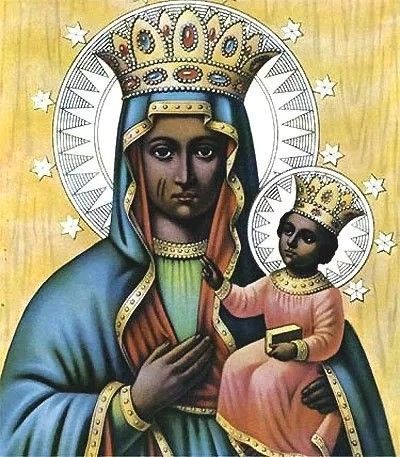
Ezili Freda is a very loving and kind lwa. When she cries for “being spoiled,” she is actually crying for us. Ezili Freda, syncretized with Our Lady of Sorrows, is the lwa who weeps for humans upon seeing them suffer and be unable to be well and satisfied.
Story:
Ezili Freda was married to Ogou Feray, but he was very coarse and did not know how to treat her as she wished to be treated. He always gave her ugly, lusterless stones and was always in a bad mood, so she decided to run away. When she fled, she encountered Agwe (lwa of the waters) and La Sirène (mermaid lwa), who consoled her and gave her shelter. Some traditions say that she married Agwe, Damballah, and even Baron Samedi.
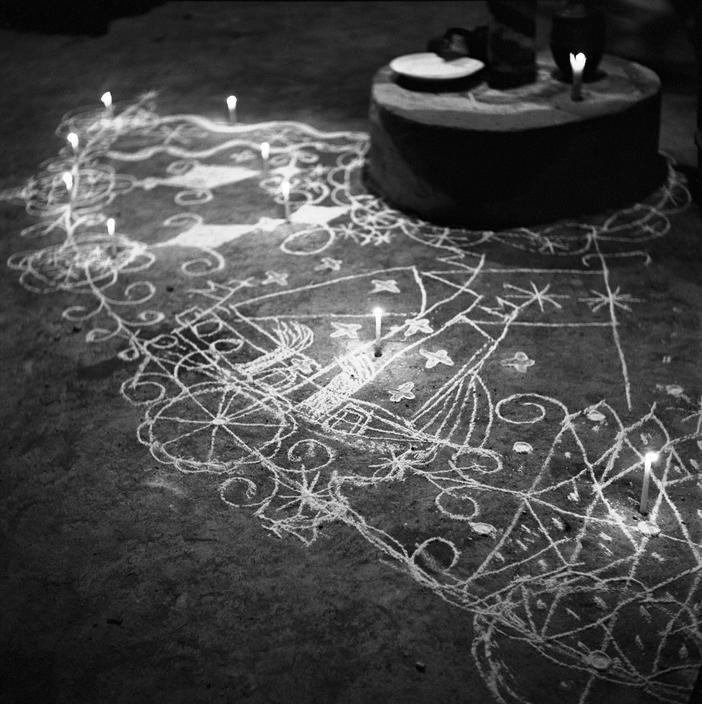
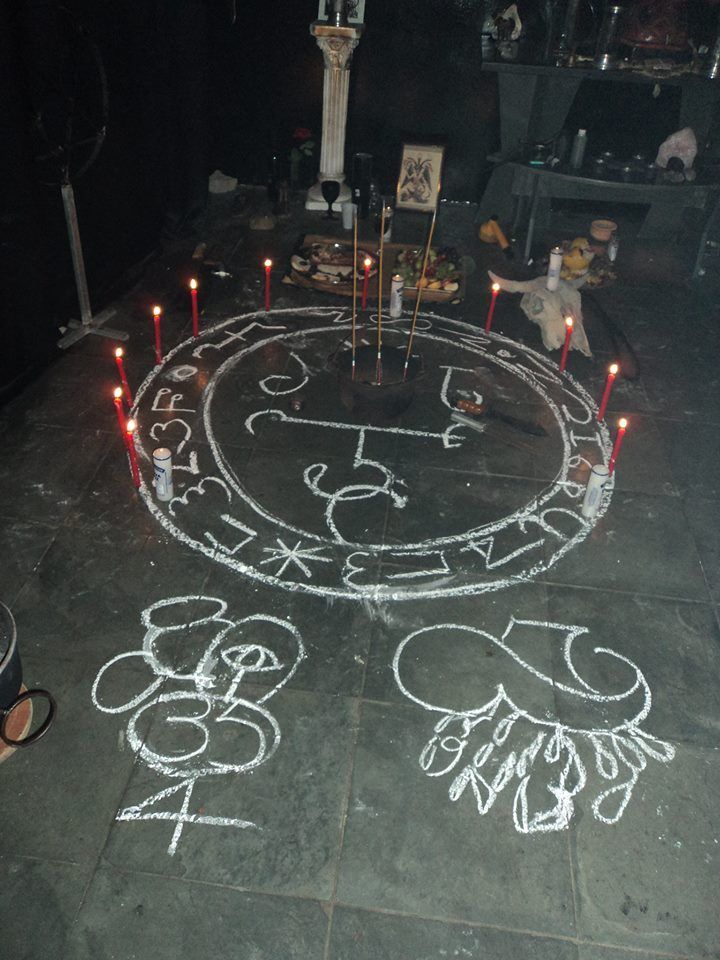
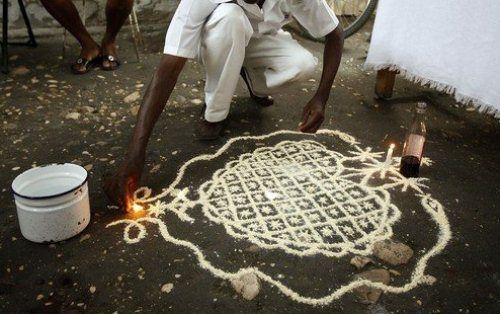
The influence of European grimoires on Haitian Vodou is one of the most neglected subjects concerning the Vodou religion. During the colonization of Saint-Domingue (present-day Haiti), Europeans brought not only Catholicism but also grimoires, talismans, sigils, and magic circles from European magic. According to ethnographer Alfred Métraux: ‘a very large number of practices and beliefs, regarded as African, are of Norman, Picard, or Limousin origin.’ An important example of this are the diagrams of the lwa, called vevé, which underwent standardization in the 19th century and incorporate symbolism from grimoires brought by the colonists, such as the ‘Albertines’ (Grand Albert and Petit Albert), Pope Honorius, the Clavicula Salomonis, Dragon Rouge, and others. Italian and German grimoires were also introduced into Vodou by sailors and merchants. Irish servants also brought their knowledge of Celtic magic.
Vèvè
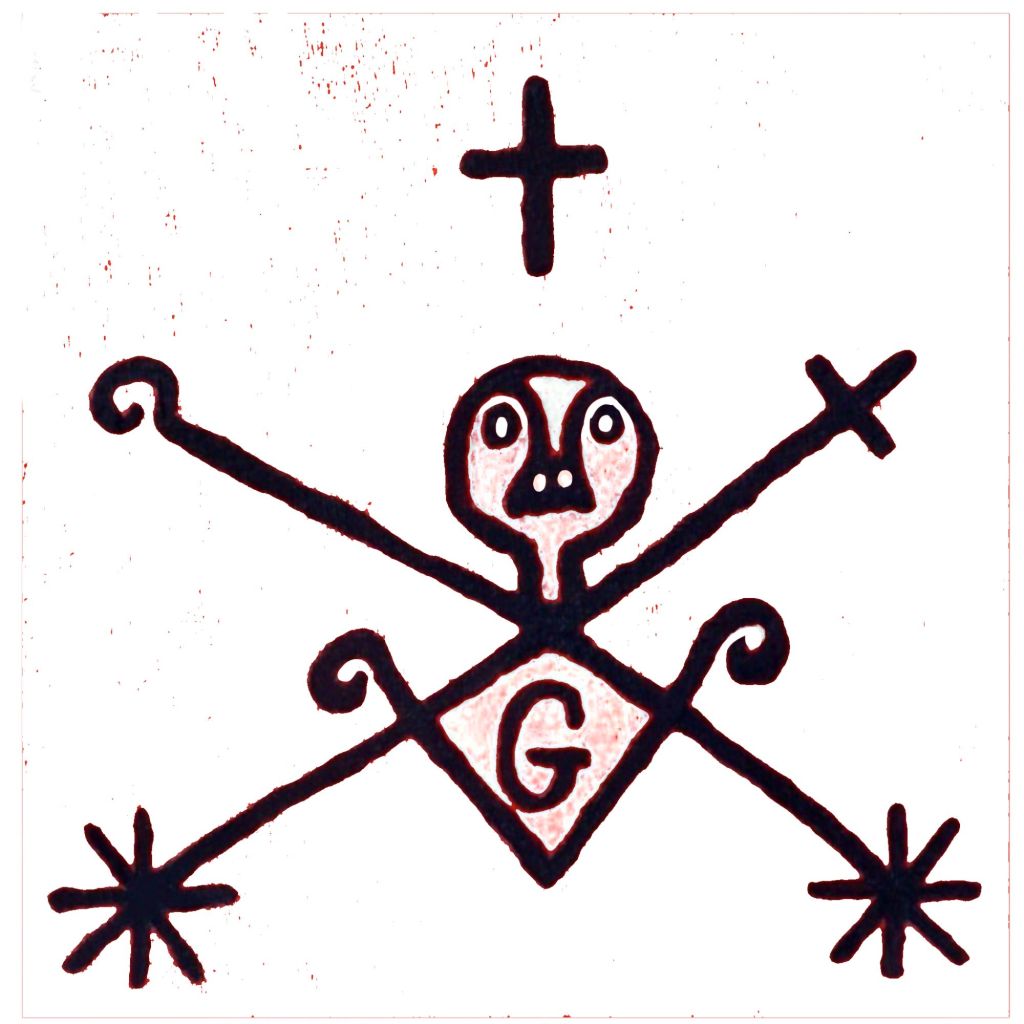
Freemasonry, the principal agent of this European influence on Vodou, arrived in Haiti a long time ago: in 1749 two lodges under French control were authorized, and in 1778 a Provincial Grand Lodge was constituted under the direction of the Grand Orient of France. According to some sources, one in every three French colonists was a Freemason. Today, there even exists a Freemasonry native to Haiti, which blends Vodou elements with the Masonic tradition of Europe and even has its own loas. We might even say that Freemasonry has become the greatest ‘white ally’ of Haitian Vodou, as Robinson Clay observes: ‘few European practices were so well adopted and adapted to Vodou as European Freemasonry.’
Vèvè of ghedes, very similar to the Masonic symbol
This shows that Vodou did not arise merely as a ‘method’ of survival and struggle against the colonists, but that there also existed a development of the religion that was not limited to the suffering of the enslaved. Regarding the presence of whites in Vodou, Moreau de Saint-Méry (1797) already recorded whites participating in Vodou, dancing and even being possessed during ceremonies in the 18th and 19th centuries.
Sigil Of Beelzebuth, Grimorium Verum
References:
MÉTRAUX, Alfred. Le Vaudou haïtien. Paris: Éditions Gallimard, 1958.
MEDRANO MARQUÉS, Manuel. Brujería europea y vudú haitiano. Historiografías, Zaragoza, no. 29, p. 21-51, Jan.-Jun. 2025. ISSN 2174-4289
MOREAU DE SAINT-MÉRY, Médéric Louis-Élie. Description topographique, physique, civile, politique et historique de la partie française de l’isle Saint-Domingue. Philadelphia: [s. n.], 1797.
ROBINSON, Clay. Freemasonry and Vodou. The Journal of the Vodou Archive, Gainesville, p. 45-50, Spring 2013.
RIGAUD, Milo. La Tradition Voudoo et le Voudoo Haïtien: son temple, ses mystères, sa magie. Paris: Éditions Niclaus, 1953.
Fajardo Spínola, Francisco. Hechicería y brujería en Canarias en la Edad Moderna. Las Palmas: Cabildo Insular de Gran Canaria, 1992.
Berendt, Tom. ‘Celtic Origins of Bosou Twa Kòn’. The Journal of Haitian Studies, vol. 26, no. 2 (Fall 2020)
Almost everyone has heard the term “Haitian vodou” at least once. But what is it, really?
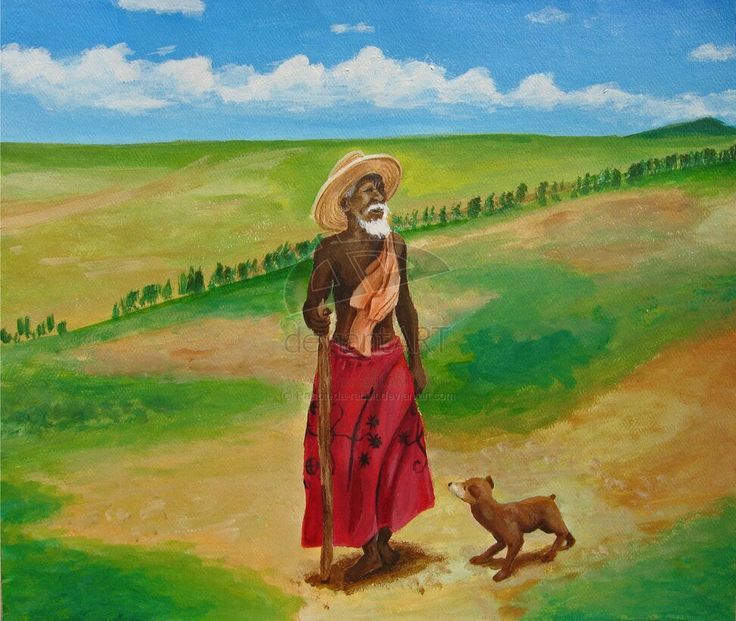
Papa Legba
Haitian Vodou is a religion born from the meeting of West and Central African spiritual traditions—especially those of the Fon, Yoruba, and Kongo peoples —with the Roman Catholicism imposed by French colonizers. It took shape mainly in the eighteenth century in the colony of Saint-Domingue. The word “Vodou” comes from the Fon term vodun, meaning “spirit” or “deity.”
Unlike the distorted image spread by cinema and popular media under the name “voodoo,” this tradition is not simply “black magic” or dolls pierced with needles. Vodou is far richer and more complex than that.
At the top of the pantheon stands Bondye (“the Good God”), the supreme creator who remains distant from human affairs. Beneath him are the lwa—spirits such as Damballah and Papa Legba—who sustain the world and assist the living. Practitioners, known as sèvitè (“servants of the spirits”), dedicate themselves to sevi lwa: serving the spirits through offerings, prayers, dances, and rituals.
Erzulie Dantor
The lwa are organized into “nations” or families. The two main ones are Rada and Petwo. The Rada nation, rooted in Dahomey and Yoruba traditions, includes spirits generally seen as more benevolent, such as Erzulie Freda and Ayida Wedo. The Petwo nation, shaped by the experience of slavery, the Haitian Revolution, and social struggle, is more intense and “hot.” It is associated with force, resistance, and power, as seen in figures like Erzulie Dantor.
There is also the important Ghede family—the lwa of the dead, the cemetery, and sexuality. Central figures include Baron Samedi, Maman Brigitte, and Gédé Nibo. Within this family one finds spirits of every origin, history, culture, and even different religions. After all, they are the dead, and death makes no distinctions.
Vodou played a fundamental role in the Haitian Revolution (1791–1804), the only successful slave revolt that created an independent state. The ceremony at Bois Caïman in 1791 is widely regarded as a founding moment of that struggle.
Even after independence, Vodou continued to face persecution from elites and the Catholic Church, who dismissed it as superstition and backwardness. Anti-superstition campaigns in the twentieth century tried to eradicate it. Yet Haitian intellectuals such as Jean Price-Mars, in Ainsi parla l’Oncle (1928), reclaimed Vodou as cultural heritage and a legitimate source of national identity—a direct challenge to colonial prejudice. For many practitioners, Christianity is neither a threat nor something to be fought. Many Haitian Vodouists move between both traditions in daily life: they receive baptism in the Church while maintaining the syncretism between the lwa and Catholic saints.
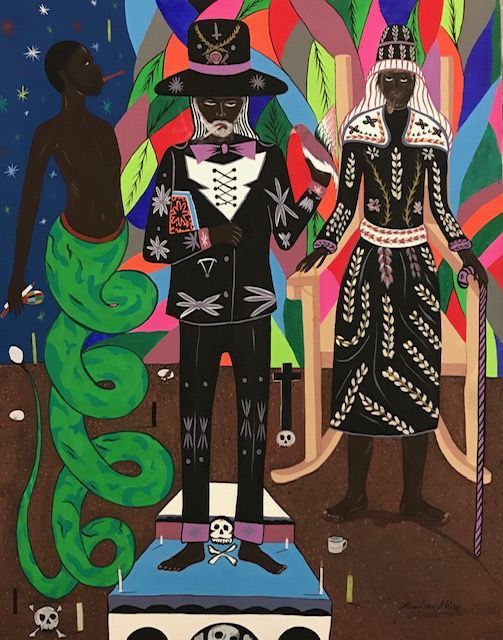
Damballah, Baron and graan Brijit, by Blaise Emilison
Ceremonies take place in sacred spaces called peristyles, led by houngans (priests) and mambos (priestesses). During these rituals, possession by the lwa occurs. As Maya Deren observed in Divine Horsemen: The Living Gods of Haiti: “In the idiom of spirit possession, the god ‘mounts’ his ‘horse’, a person.” She explained that the initiate does not seek possession as an escape, but as a form of expansion. “The self must leave if the loa is to enter,” allowing the person to become the vehicle through which the divine takes flesh, so the community can witness, touch, and interact with the living presence of the spirits. People turn to Vodou to heal illness, resolve conflicts, protect their families, and face hardship—not merely to harm others, as media portrayals often suggest.
In Dieu dans le vaudou haïtien (translated as God in Haitian Vodou), Laënnec Hurbon emphasizes: “Vodou is a solution of survival for the Haitian people, in that it helps them to become conscious of themselves and to protect themselves against an unhappy existence by refusing the ruptures in the fabric of the world. […] It is not surprising that, despite all persecutions, Vodou has survived in Haiti. In fact, it arrived in the country marked by persecution and was the mode of resistance Black people used against whites.”
Women hold a prominent place in Vodou. Historically, many have led communities and resistance movements—figures such as Cécile Fatiman, who played an active role in the Haitian Revolution, are clear examples. Vodou is one of the few spiritual traditions of the Black Atlantic with institutional gender parity, a striking contrast to the patriarchal structures of the Christian churches present in Haiti.
Throughout the twentieth and twenty-first centuries, Vodou has faced strong international stigmatization, often linked to images of zombification and black magic. Haitian and foreign anthropologists have shown that these portrayals are largely colonial and Hollywood constructions. Above all, Vodou is a religion of life, resilience, and celebration.
Today Vodou is recognized as an intangible cultural heritage of Haiti and forms part of the national identity. In times of crisis, many Haitians turn to it again for protection and meaning. As Hurbon observed, it is the system the Haitian people developed to confront suffering, ease pain, and endure.