
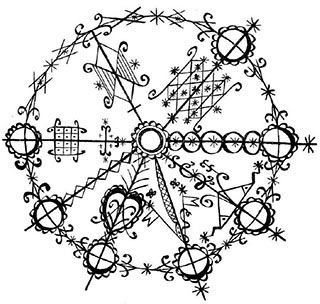
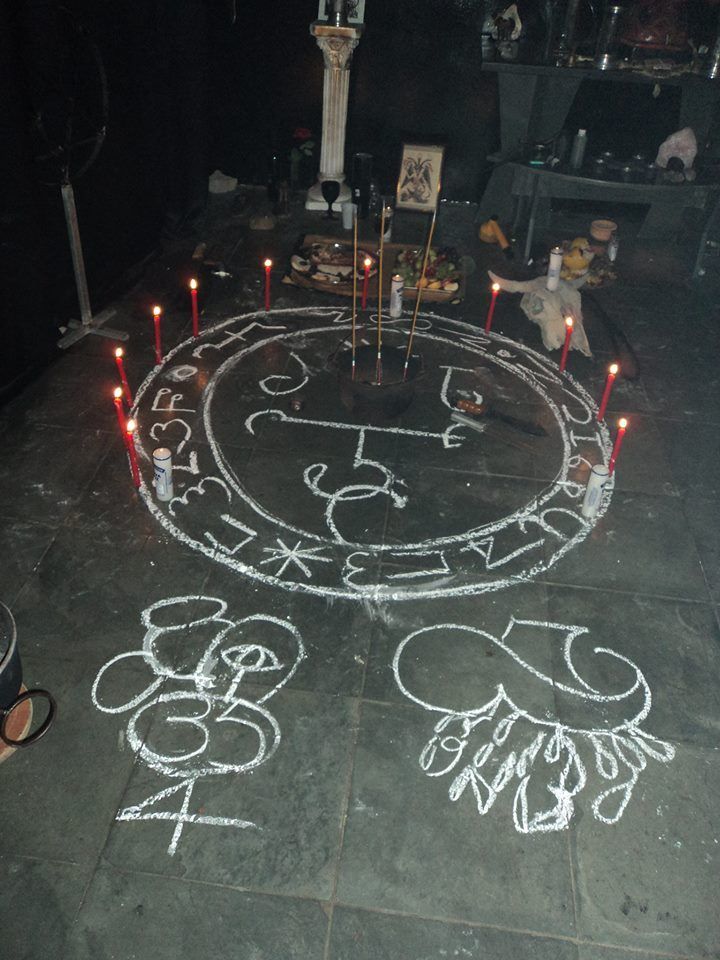
The influence of European grimoires on Haitian Vodou is one of the most neglected subjects concerning the Vodou religion. During the colonization of Saint-Domingue (present-day Haiti), Europeans brought not only Catholicism but also grimoires, talismans, sigils, and magic circles from European magic. According to ethnographer Alfred Métraux: ‘a very large number of practices and beliefs, regarded as African, are of Norman, Picard, or Limousin origin.’ An important example of this are the diagrams of the lwa, called vevé, which underwent standardization in the 19th century and incorporate symbolism from grimoires brought by the colonists, such as the ‘Albertines’ (Grand Albert and Petit Albert), Pope Honorius, the Clavicula Salomonis, Dragon Rouge, and others. Italian and German grimoires were also introduced into Vodou by sailors and merchants. Irish servants also brought their knowledge of Celtic magic.
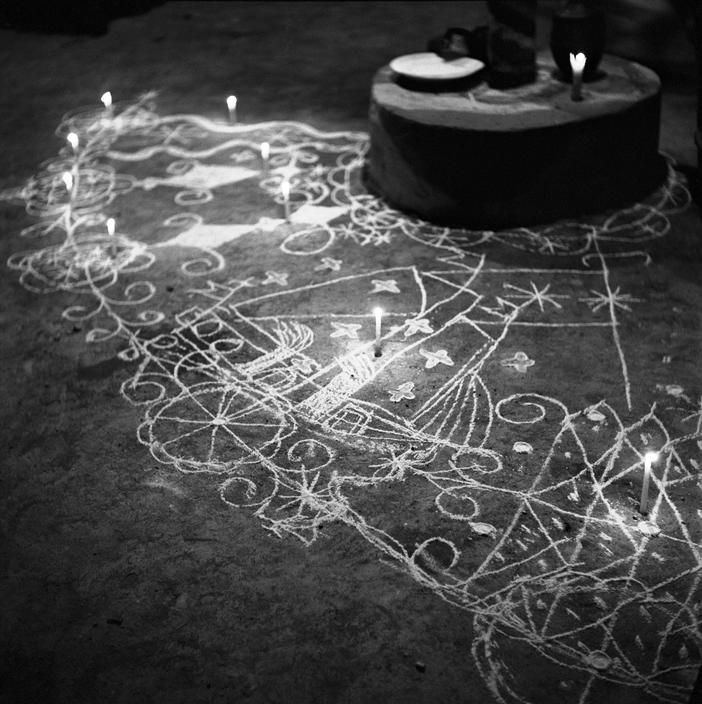
Freemasonry, the principal agent of this European influence on Vodou, arrived in Haiti a long time ago: in 1749 two lodges under French control were authorized, and in 1778 a Provincial Grand Lodge was constituted under the direction of the Grand Orient of France. According to some sources, one in every three French colonists was a Freemason. Today, there even exists a Freemasonry native to Haiti, which blends Vodou elements with the Masonic tradition of Europe and even has its own loas. We might even say that Freemasonry has become the greatest ‘white ally’ of Haitian Vodou, as Robinson Clay observes: ‘few European practices were so well adopted and adapted to Vodou as European Freemasonry.’
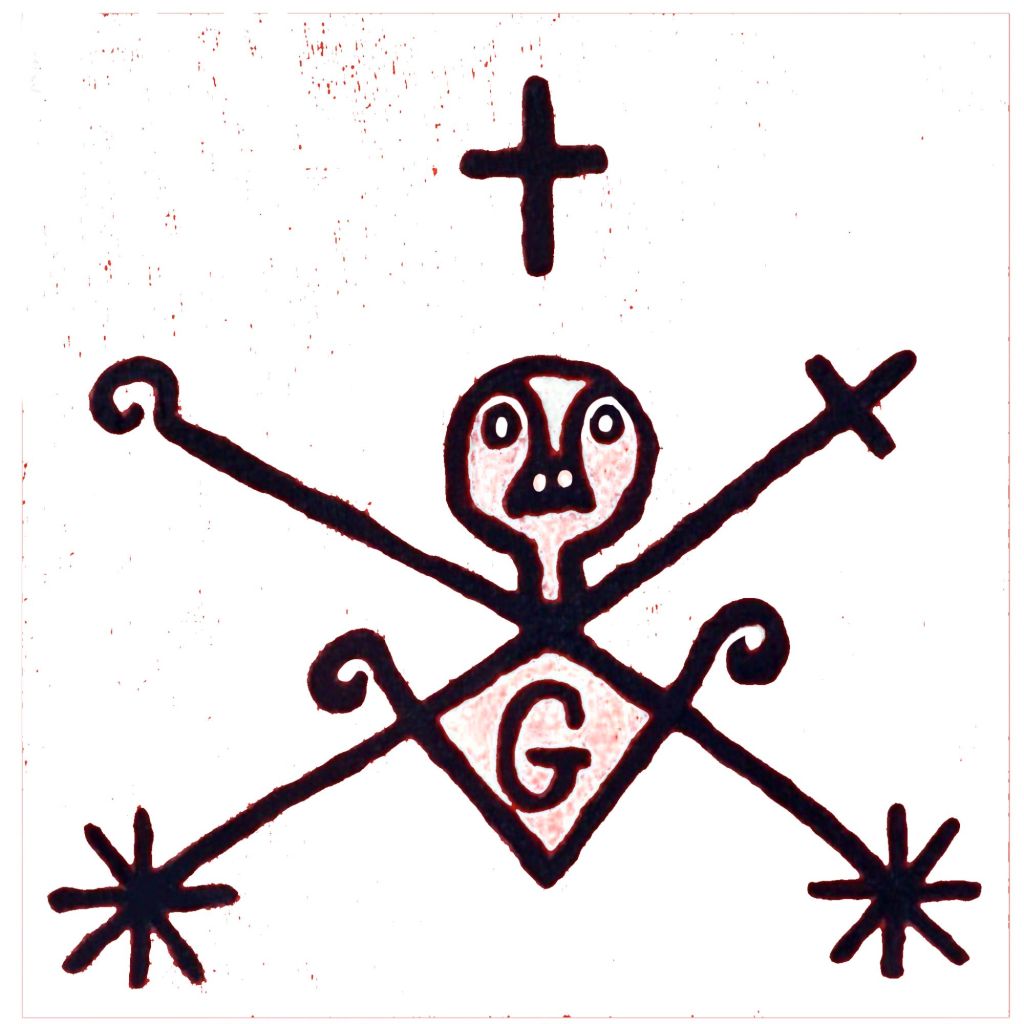
This shows that Vodou did not arise merely as a ‘method’ of survival and struggle against the colonists, but that there also existed a development of the religion that was not limited to the suffering of the enslaved. Regarding the presence of whites in Vodou, Moreau de Saint-Méry (1797) already recorded whites participating in Vodou, dancing and even being possessed during ceremonies in the 18th and 19th centuries.
References:
MÉTRAUX, Alfred. Le Vaudou haïtien. Paris: Éditions Gallimard, 1958.
MEDRANO MARQUÉS, Manuel. Brujería europea y vudú haitiano. Historiografías, Zaragoza, no. 29, p. 21-51, Jan.-Jun. 2025. ISSN 2174-4289
MOREAU DE SAINT-MÉRY, Médéric Louis-Élie. Description topographique, physique, civile, politique et historique de la partie française de l’isle Saint-Domingue. Philadelphia: [s. n.], 1797.
ROBINSON, Clay. Freemasonry and Vodou. The Journal of the Vodou Archive, Gainesville, p. 45-50, Spring 2013.
RIGAUD, Milo. La Tradition Voudoo et le Voudoo Haïtien: son temple, ses mystères, sa magie. Paris: Éditions Niclaus, 1953.
Fajardo Spínola, Francisco. Hechicería y brujería en Canarias en la Edad Moderna. Las Palmas: Cabildo Insular de Gran Canaria, 1992.
Berendt, Tom. ‘Celtic Origins of Bosou Twa Kòn’. The Journal of Haitian Studies, vol. 26, no. 2 (Fall 2020)


Leave a comment