Ezili Freda (Erzili/Erzulie Freda Daomé) is the most well-known and beloved female lwa in Haitian Vodou. She is the lwa of love, luxury, beauty, and femininity, of homosexuals, and of other matters of the heart and glamour.
Practitioners and scholars of Haitian Vodou often associate Ezili Freda with the ancient Kingdom of Dahomey (present-day Benin). According to this tradition, all lwa who bear the name Ezili descend from Azili, water spirits associated with beauty, the feminine, luxury, and jealousy — notably Azili Tobosi and Azili Kaia.
However, some people, such as researcher Joan Dayan in the classic essay “Erzulie: A Women’s History of Haiti,” argue that Ezili has no clear, single African antecedent and that she crystallized in Haiti, primarily under French influence.
I, personally, believe that the Ezili family came from the Azili, but that, like other lwa, they took on a more Haitian character and became something more unique in Haiti.
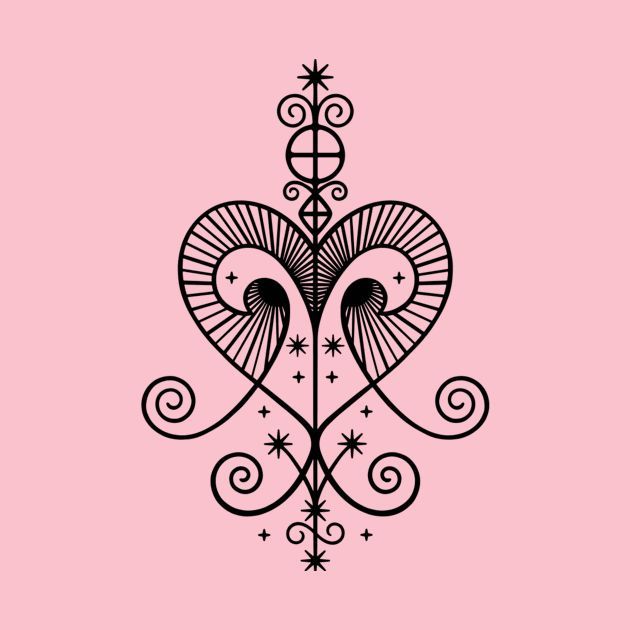
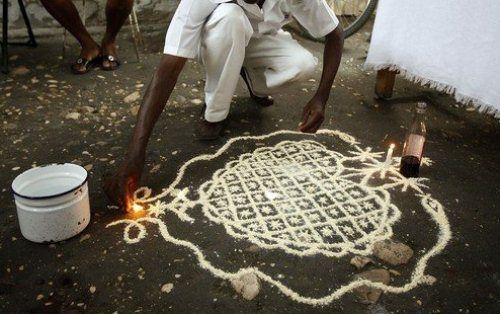
Vèvè
It is somewhat common to hear that Freda behaves like a French noblewoman, that she refuses to speak Creole or to receive things that are “too Haitian,” and many even reduce her to this, calling her spoiled, lazy, crybabyish, and jealous. But of course, this is a great folly.
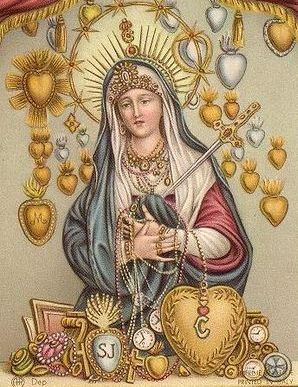
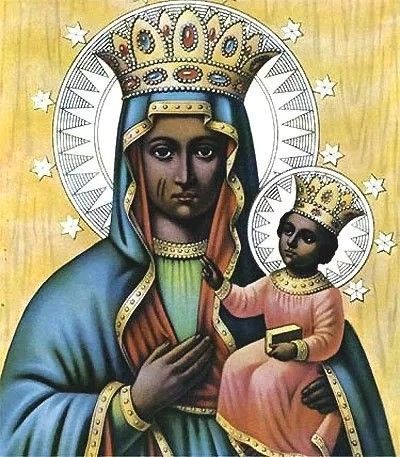
Ezili Freda is a very loving and kind lwa. When she cries for “being spoiled,” she is actually crying for us. Ezili Freda, syncretized with Our Lady of Sorrows, is the lwa who weeps for humans upon seeing them suffer and be unable to be well and satisfied.
Story:
Ezili Freda was married to Ogou Feray, but he was very coarse and did not know how to treat her as she wished to be treated. He always gave her ugly, lusterless stones and was always in a bad mood, so she decided to run away. When she fled, she encountered Agwe (lwa of the waters) and La Sirène (mermaid lwa), who consoled her and gave her shelter. Some traditions say that she married Agwe, Damballah, and even Baron Samedi.
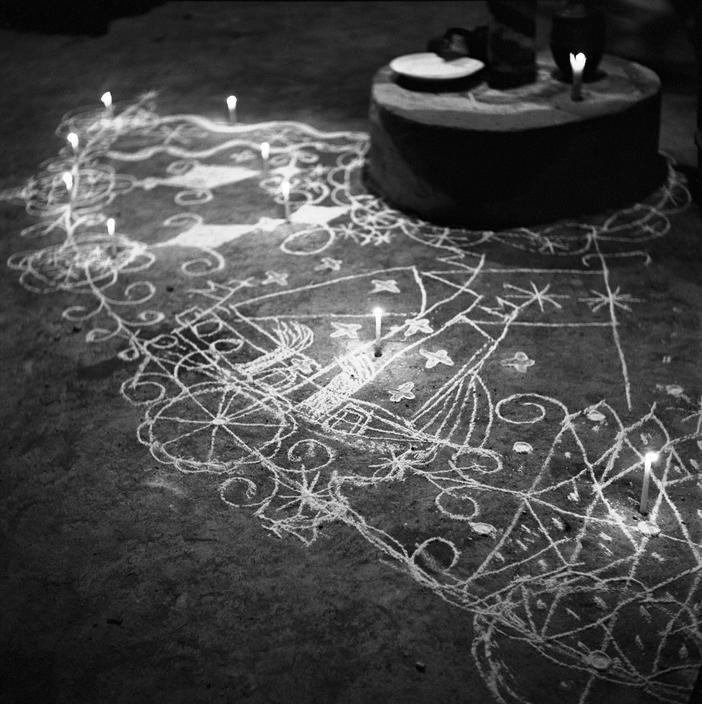
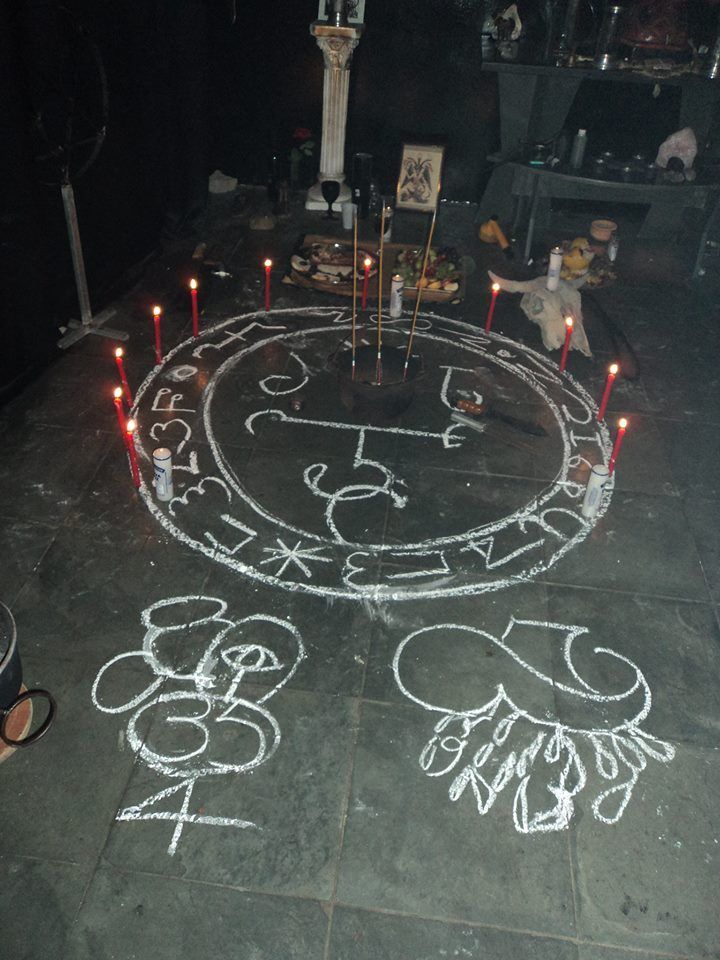
The influence of European grimoires on Haitian Vodou is one of the most neglected subjects concerning the Vodou religion. During the colonization of Saint-Domingue (present-day Haiti), Europeans brought not only Catholicism but also grimoires, talismans, sigils, and magic circles from European magic. According to ethnographer Alfred Métraux: ‘a very large number of practices and beliefs, regarded as African, are of Norman, Picard, or Limousin origin.’ An important example of this are the diagrams of the lwa, called vevé, which underwent standardization in the 19th century and incorporate symbolism from grimoires brought by the colonists, such as the ‘Albertines’ (Grand Albert and Petit Albert), Pope Honorius, the Clavicula Salomonis, Dragon Rouge, and others. Italian and German grimoires were also introduced into Vodou by sailors and merchants. Irish servants also brought their knowledge of Celtic magic.
Vèvè
Freemasonry, the principal agent of this European influence on Vodou, arrived in Haiti a long time ago: in 1749 two lodges under French control were authorized, and in 1778 a Provincial Grand Lodge was constituted under the direction of the Grand Orient of France. According to some sources, one in every three French colonists was a Freemason. Today, there even exists a Freemasonry native to Haiti, which blends Vodou elements with the Masonic tradition of Europe and even has its own loas. We might even say that Freemasonry has become the greatest ‘white ally’ of Haitian Vodou, as Robinson Clay observes: ‘few European practices were so well adopted and adapted to Vodou as European Freemasonry.’
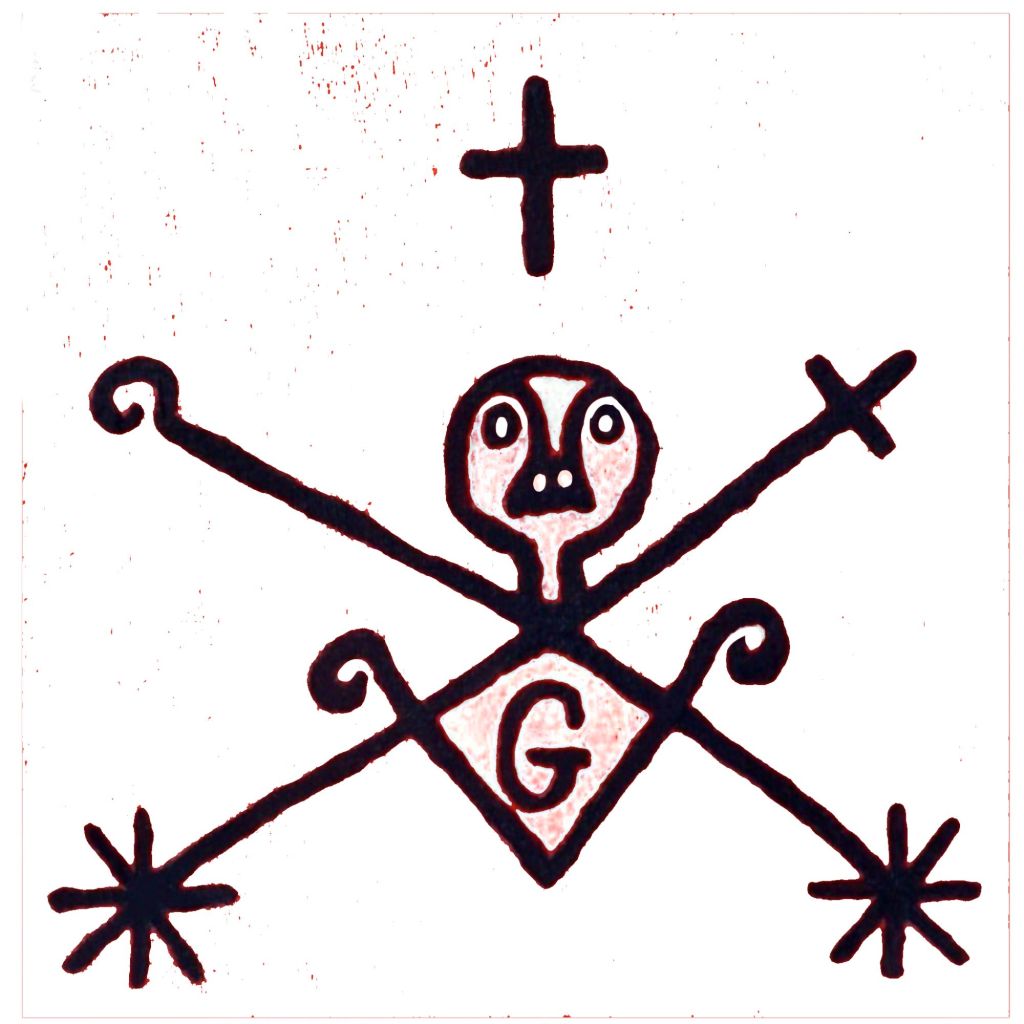
Vèvè of ghedes, very similar to the Masonic symbol
This shows that Vodou did not arise merely as a ‘method’ of survival and struggle against the colonists, but that there also existed a development of the religion that was not limited to the suffering of the enslaved. Regarding the presence of whites in Vodou, Moreau de Saint-Méry (1797) already recorded whites participating in Vodou, dancing and even being possessed during ceremonies in the 18th and 19th centuries.
Sigil Of Beelzebuth, Grimorium Verum
References:
MÉTRAUX, Alfred. Le Vaudou haïtien. Paris: Éditions Gallimard, 1958.
MEDRANO MARQUÉS, Manuel. Brujería europea y vudú haitiano. Historiografías, Zaragoza, no. 29, p. 21-51, Jan.-Jun. 2025. ISSN 2174-4289
MOREAU DE SAINT-MÉRY, Médéric Louis-Élie. Description topographique, physique, civile, politique et historique de la partie française de l’isle Saint-Domingue. Philadelphia: [s. n.], 1797.
ROBINSON, Clay. Freemasonry and Vodou. The Journal of the Vodou Archive, Gainesville, p. 45-50, Spring 2013.
RIGAUD, Milo. La Tradition Voudoo et le Voudoo Haïtien: son temple, ses mystères, sa magie. Paris: Éditions Niclaus, 1953.
Fajardo Spínola, Francisco. Hechicería y brujería en Canarias en la Edad Moderna. Las Palmas: Cabildo Insular de Gran Canaria, 1992.
Berendt, Tom. ‘Celtic Origins of Bosou Twa Kòn’. The Journal of Haitian Studies, vol. 26, no. 2 (Fall 2020)
Almost everyone has heard the term “Haitian vodou” at least once. But what is it, really?
Papa Legba
Haitian Vodou is a religion born from the meeting of West and Central African spiritual traditions—especially those of the Fon, Yoruba, and Kongo peoples —with the Roman Catholicism imposed by French colonizers. It took shape mainly in the eighteenth century in the colony of Saint-Domingue. The word “Vodou” comes from the Fon term vodun, meaning “spirit” or “deity.”
Unlike the distorted image spread by cinema and popular media under the name “voodoo,” this tradition is not simply “black magic” or dolls pierced with needles. Vodou is far richer and more complex than that.
At the top of the pantheon stands Bondye (“the Good God”), the supreme creator who remains distant from human affairs. Beneath him are the lwa—spirits such as Damballah and Papa Legba—who sustain the world and assist the living. Practitioners, known as sèvitè (“servants of the spirits”), dedicate themselves to sevi lwa: serving the spirits through offerings, prayers, dances, and rituals.
Erzulie Dantor
The lwa are organized into “nations” or families. The two main ones are Rada and Petwo. The Rada nation, rooted in Dahomey and Yoruba traditions, includes spirits generally seen as more benevolent, such as Erzulie Freda and Ayida Wedo. The Petwo nation, shaped by the experience of slavery, the Haitian Revolution, and social struggle, is more intense and “hot.” It is associated with force, resistance, and power, as seen in figures like Erzulie Dantor.
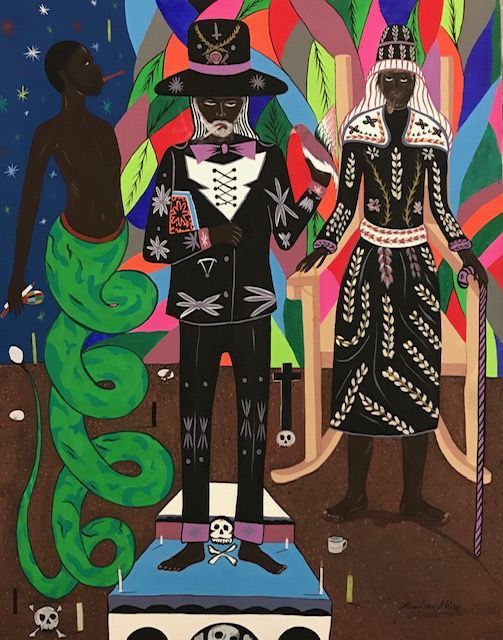
There is also the important Ghede family—the lwa of the dead, the cemetery, and sexuality. Central figures include Baron Samedi, Maman Brigitte, and Gédé Nibo. Within this family one finds spirits of every origin, history, culture, and even different religions. After all, they are the dead, and death makes no distinctions.
Vodou played a fundamental role in the Haitian Revolution (1791–1804), the only successful slave revolt that created an independent state. The ceremony at Bois Caïman in 1791 is widely regarded as a founding moment of that struggle.
Even after independence, Vodou continued to face persecution from elites and the Catholic Church, who dismissed it as superstition and backwardness. Anti-superstition campaigns in the twentieth century tried to eradicate it. Yet Haitian intellectuals such as Jean Price-Mars, in Ainsi parla l’Oncle (1928), reclaimed Vodou as cultural heritage and a legitimate source of national identity—a direct challenge to colonial prejudice. For many practitioners, Christianity is neither a threat nor something to be fought. Many Haitian Vodouists move between both traditions in daily life: they receive baptism in the Church while maintaining the syncretism between the lwa and Catholic saints.
Damballah, Baron and graan Brijit, by Blaise Emilison
Ceremonies take place in sacred spaces called peristyles, led by houngans (priests) and mambos (priestesses). During these rituals, possession by the lwa occurs. As Maya Deren observed in Divine Horsemen: The Living Gods of Haiti: “In the idiom of spirit possession, the god ‘mounts’ his ‘horse’, a person.” She explained that the initiate does not seek possession as an escape, but as a form of expansion. “The self must leave if the loa is to enter,” allowing the person to become the vehicle through which the divine takes flesh, so the community can witness, touch, and interact with the living presence of the spirits. People turn to Vodou to heal illness, resolve conflicts, protect their families, and face hardship—not merely to harm others, as media portrayals often suggest.
In Dieu dans le vaudou haïtien (translated as God in Haitian Vodou), Laënnec Hurbon emphasizes: “Vodou is a solution of survival for the Haitian people, in that it helps them to become conscious of themselves and to protect themselves against an unhappy existence by refusing the ruptures in the fabric of the world. […] It is not surprising that, despite all persecutions, Vodou has survived in Haiti. In fact, it arrived in the country marked by persecution and was the mode of resistance Black people used against whites.”
Women hold a prominent place in Vodou. Historically, many have led communities and resistance movements—figures such as Cécile Fatiman, who played an active role in the Haitian Revolution, are clear examples. Vodou is one of the few spiritual traditions of the Black Atlantic with institutional gender parity, a striking contrast to the patriarchal structures of the Christian churches present in Haiti.
Throughout the twentieth and twenty-first centuries, Vodou has faced strong international stigmatization, often linked to images of zombification and black magic. Haitian and foreign anthropologists have shown that these portrayals are largely colonial and Hollywood constructions. Above all, Vodou is a religion of life, resilience, and celebration.
Today Vodou is recognized as an intangible cultural heritage of Haiti and forms part of the national identity. In times of crisis, many Haitians turn to it again for protection and meaning. As Hurbon observed, it is the system the Haitian people developed to confront suffering, ease pain, and endure.
When people talk about demonolatry, many say that demons don’t need worship and that worshiping them is foolish. But this is just a misunderstanding, stemming from the misuse of the word latria. What exists in demonolatry is not actually a latria, but a dulia (respect, veneration, honor) — the official term the Catholic Church uses for the veneration of saints and angels, in which a Catholic asks things of the saints and, in return, offers a promise, for example. Worshiping a demon is not adoring it the way a Christian adores Jehovah, nor is it seeing that demon as a perfect god. Demonolatry is establishing a relationship with a greater demon (Baal, Asmodeus, Haagenti, etc.) through a lesser demon (a legionary) that represents it. This practice allows the demonolater a more direct and potentially faster path. For example: a demonolater might perform a more elaborate, ceremonial ritual, but sometimes they can make a request more informally using the lesser demon, who is far more accessible.
The term demonolatry first appeared in 1557, in the treatise Daemonolatreiae libri tres (Three Books of Demonolatry), by the Frenchman Nicolas Rémy, a witch hunter. Originally, then, the term was an accusation of worshiping the devil and his demons leveled against supposed witches. It’s not accurate to say that demonolatry didn’t exist before Satanist groups and S. Connolly’s books: many people, whether seriously or as a provocation, were already performing cults to demonic entities. But demonolatry as we know it today — that is, a true cult of demons and a divine view of them — is something modern, still developing, and one that draws disapproval from more “traditional” people, such as practitioners of Solomonic goetia.
Demonolatry has a strong predominance of demons from Christian demonology, since that’s the most popular one in the West — where demonolatry originated. However, these beings are included in many religions and cultures, from the most ancient to the most recent: they appear in Hinduism, in the ancient religions of the Middle East, in the cultural religions of various indigenous peoples, in branches of Buddhism, in Hellenism, among others. The concept of a more “dense and materialistic” spirit has existed for millennia.
Demonolatry is not limited to worshiping the 72 demons of the Goetia, which are part of a list that, by the way, didn’t come into being fully formed, but only established itself as we find it today starting in the 17th century — well after the publication of the book that served as its basis: the Pseudomonarchia Daemonum, from 1577, by Wierus. Therefore, the demons on that list, whose number amounts to just 72, already existed long before the Goetia as it is practiced today, in other texts. Moreover, there are demonolaters who don’t worship the 72 demons, but rather other, older demons and/or ones with no connection to Euro-Christian texts.
I’ve seen other demonolaters and people from the more traditional camp say that demons don’t want anyone’s soul and don’t want others’ energy, but that’s a mediocre lie.
Shiva, the Indian god seen by the West as an always benevolent, pure, and holy deity — the pinnacle of perfection — accepted human sacrifices of decapitated boys. Even Allah, subhanahu wa ta’ala, during Eid al-Adha (the Festival of Sacrifice), receives the sacrifice of more than 50 million animals annually. And I don’t even need to mention other deities like Kali, Baal Hammon, and Huitzilopochtli, the god of war and the sun who required a constant flow of human hearts to have the strength to make the sun rise every day.
It would be pretty funny if demons (dense, material, and amoral beings) were any different. They really aren’t vampires that need to drain others’ energy to exist, but that doesn’t mean they can’t, don’t want to, and don’t enjoy doing so.
It’s also “trendy” to say that the soul has no value whatsoever, and that demons aren’t interested in it. But for millennia and across thousands of cultures, the soul is the most important and powerful thing a person has, and the only thing they truly possess. In Siberia, there’s an indigenous people called the Evenki who believe that people can lose their soul during their lifetime. Shamans then set out on what we call an astral journey to recover people’s souls, and to do so, they passed through demons and great spirits. In Tibetan Buddhism and in Bön, the pre-Buddhist indigenous religion of Tibet, the “soul” or vitality bla can be lost or taken by demons. And to keep that from happening, rituals are performed by lamas invoking deities, protectors, and the power of the Buddha/Dharma, with ransom offerings (glud). The soul’s fate after physical death is not to be trapped in something, but through pacts and a reckless life, that can happen. And it’s very beneficial for demons to achieve that.
I’m not saying to start killing animals and people as offerings to demonic beings, nor to offer your soul to them, but saying that demons don’t care about offerings — that is, about energy — is utterly stupid. The offering is essential in demonolatry.
In demonolatrous rituals, we typically use the same tools a Solomonic magician uses, but adapted for demonolatry — for example, by removing the names of God and the angels and replacing them with demonic names, and by consecrating these tools to the demons. Some demonolaters no longer use the elements of Solomonic magic at all — the triangle of manifestation, the magic circle, the sigils from the grimoires, the wands, and other Solomonic tools — and instead work only with elements associated with the demon being evoked. Both approaches work and bring good results — and I say that from personal experience as well.
Something demonolaters may also do, though of course it isn’t required, is practice prayers and rosaries, meditations, and non-ritualistic offerings, or channel the energy of some activity as an offering. There are many demonolatrous ways to stay connected with a given demon.
Regardless of how a demonolater practices their demonolatry, the use of an oracle — preferably a tarot deck — is absolutely essential and mandatory. Always seek to find out through an oracle whether you’re truly working with a demon, whether it accepts what you’re doing, whether it’s being sincere, whether it’s worth contacting the demon you desire, etc. Always settle your doubts with an oracle.
Baal-Hadad was the principal god of storms, rain, thunder, and agricultural fertility in the ancient religion and mythology of the peoples of the Levant and Canaan. The term Baal (בעל) means “lord,” “owner,” or “master,” having originally been an epithet of Hadad that, over time, came to be used as his proper name — which can give rise to confusion, since there are various gods called Baalim (the plural of Baal).
Baal-Hadad is regarded as the king of the gods, the guarantor of law, of social order, and of the balance between heaven and earth, as well as being the principal source of life for the agriculture of the Levant. The god is also called the “Rider of the Clouds” (rkb’rpt) and “Prince, Lord of the Earth” (Zbl Bal Arş).
For more than two thousand years, Baal-Hadad was one of the most worshipped and influential gods of the Near East, also holding great importance in local politics and in the administration of justice. Kings such as Zakkur of Hamath claimed that Baal had made them sovereigns; thus, royal authority was seen as directly granted by Baal, and the laws imposed by the king were considered to be ordained by him. The monarch, as the god’s representative, had the obligation to promote “righteousness, peace, and well-being” among the people. Should he fail in this responsibility by ruling unjustly, Baal would punish him, often by sending an enemy army to destroy the kingdom.
In the military context, Baal was seen as a warrior god who marched with the armies. Kings turned to him in times of war, and he responded through prophets, promising to deliver the king from his enemies. Success in battle was interpreted as a sign of Baal’s favor.
The principal narrative concerning Hadad is found in the Baal Cycle (or the Cycle of Baal and Anat), an epic preserved on clay tablets discovered at Ras Shamra (ancient Ugarit) in the 1920s. The cycle narrates Baal’s rise to power and his struggle against other gods who opposed him, such as Yam (the sea) and Mot (death).
The cycle reflects the agricultural calendar of the Levant and also influenced the cult of the god:
Summer: Baal reigns normally and brings blessings to the people. The cult is celebrated with generous offerings, banquets, and rituals of thanksgiving for the rains and the harvests.
Autumn: Baal gradually weakens, and the cult becomes more silent, with fewer offerings.
Winter: Baal “dies” or descends to the underworld. People wept, expressed sorrow, made supplications, and, in some cases, practiced self-flagellation with knives and spears until blood was shed, as a way of demonstrating extreme devotion and sharing in Baal’s suffering.
Spring: Baal resurrects or returns. The people held feasts and abundant celebrations, with fertility rituals that included symbolic sexual practices, representing the return of the rains and of life to the earth.
The cult was conducted in urban temples and on the so-called bamot (hills or high places where altars were erected), for it was believed that elevation facilitated communication with the god. Mount Safom (Jebel Aqra), north of Ugarit, was considered his celestial dwelling and a place of pilgrimage among the devotees of Baal-Hadad.
To Baal were offered bread, wine, olive oil, fruits, beer, incense, and so on, as well as animal sacrifices, such as bulls, rams, doves, and sheep, which were given whole or in parts. These offerings were burned upon the altars in certain rituals and, in others, distributed among the participants (kings, priests, and the people).
There is no evidence that Baal-Hadad received child sacrifices; the Baal Cycle itself describes offerings of animals, banquets, and fertility rituals, but never mentions children. Infant sacrifices are associated with Baal-Hammon, another Baalim god, worshipped mainly in North Africa and Carthage.
On the internet, it is common to find magicians offering pacts and agreements with Baal in exchange for wealth and prosperity; Baal has ceased to be seen as the demon of flies and of child sacrifice, and has become the demon of money, of the elite, and of power. Yet when these magicians are asked who Baal is, they reply: “he is the god of the harvest, of fertility, of crops.” But why has a harvest god become one of the greatest — if not the greatest — symbols of wealth today?
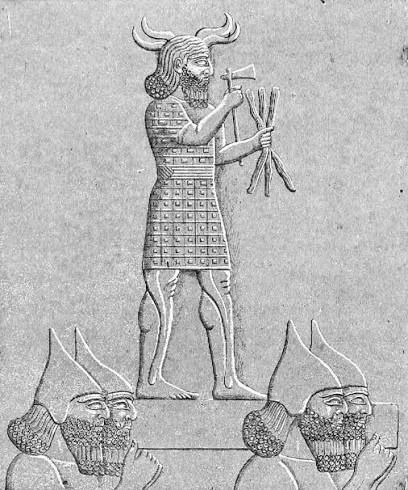
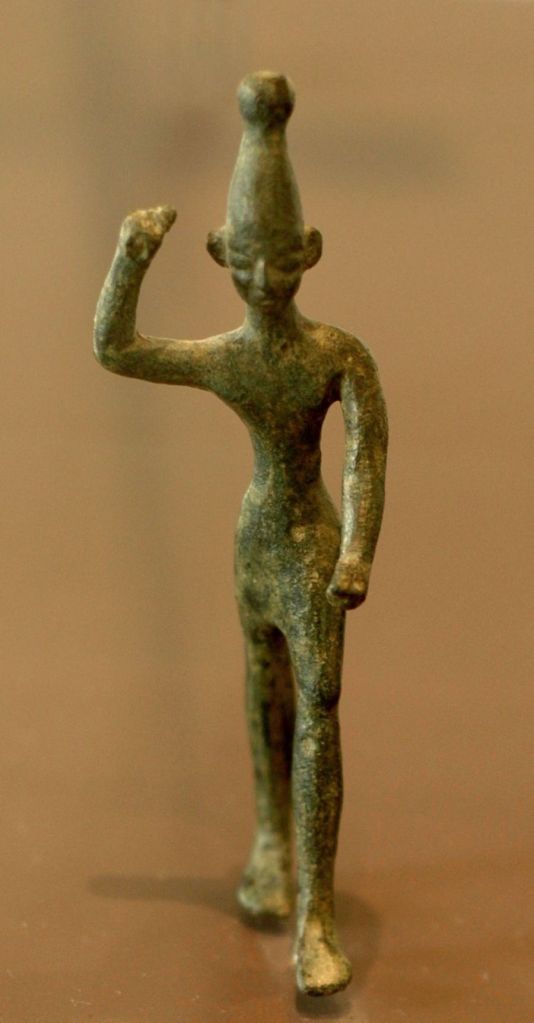
Baal Hadad
The Semitic word baʿal means roughly “lord,” “master,” “owner,” or “husband.” For this reason, “Baal” did not originally function as the name of a single universal deity. Different deities could receive the title of Baal, “Lord,” and so we find different Baalim in different regions and periods.
Among them, two of the most important were Baal-Hadad, especially known in Syria and Canaan, and Baal-Hammon, who became one of the principal deities of the Punic world, especially in Carthage.
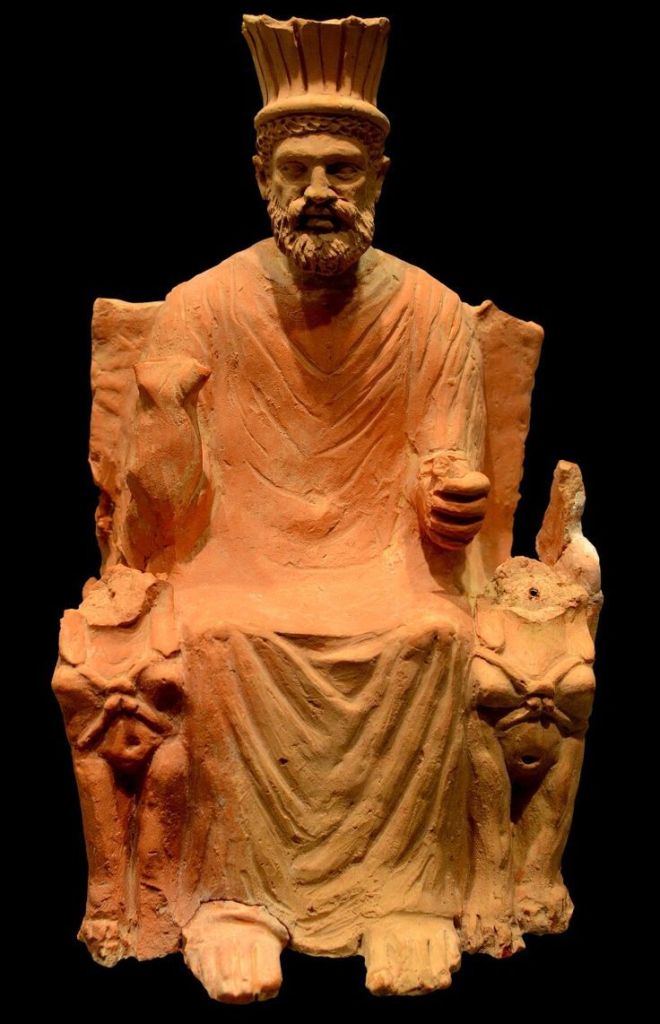
Baal Hammon
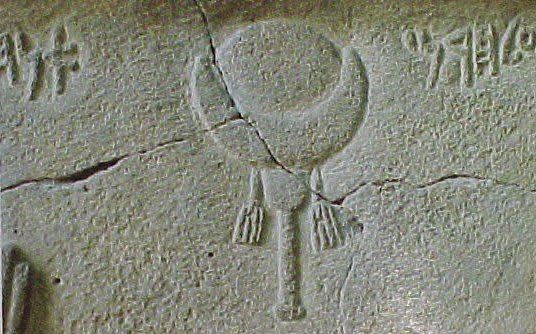
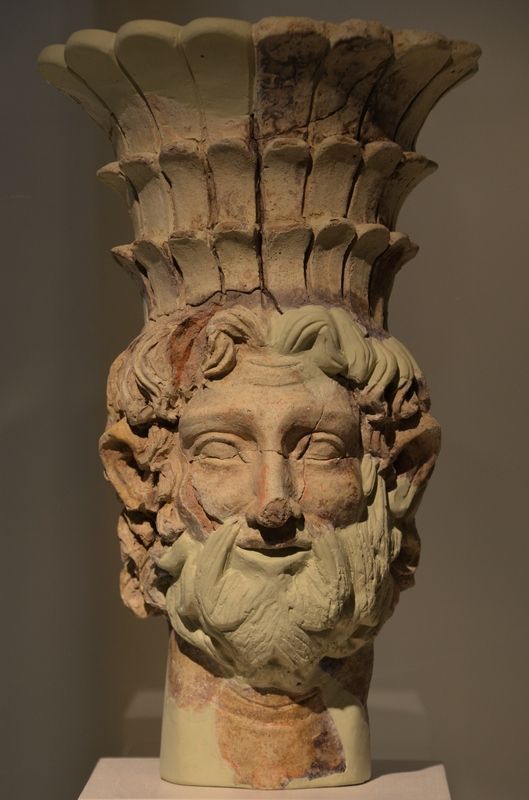
Baal Hadad and Baal Hammon were the principal Baalim gods of history; Hadad began his cult in Canaan and Ugarit around 2500 BCE, and Hammon in Carthage from c. the 9th/8th century BCE onward. Baal Hadad was worshipped as a god of lightning, rain, thunderbolts, fertility, harvests, and crops — a god who influenced the seasons, who took part in wars, who could heal the wounded, and who could even participate in the cult of the dead. Over so many years of worship, the god Hadad received countless titles and attributions. Baal Hammon, for his part, was the supreme god of Carthage and of Punic civilization, associated with the sky, fertility, the sun, and vegetation. His consort Tanit was the goddess of the moon, fertility, motherhood, and war, often called the Face of Baal (Pene Baal). Together, Baal Hammon and Tanit were the supreme deities of Punic civilization and of certain peoples of North Africa.
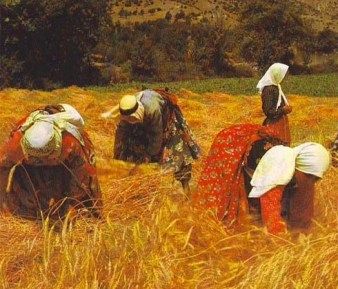
People in a plantation
Agriculture was fundamental to the survival, economy, social organization, and religion of the peoples who worshipped Baal Hadad and Baal Hammon, especially in regions dependent on seasonal rainfall (rain-fed or “baali” agriculture), rather than on river irrigation as in Egypt or southern Mesopotamia. The Baal Cycle, written for Baal Hadad, and its Sacred Theater represent the seasons of the year in mythological form: in summer, Hadad reigns in sovereignty; in autumn, he descends to the underworld and weakens; in winter, he dies (or disappears); in spring, he resurrects. This journey of Baal represents the fertility and abundance of summer and spring, and the threat of famine in autumn and winter.
In the context of the cult of Baal Hammon, agriculture sustained the city, fed the army, generated taxes, and financed trade and naval power. Carthage became an important exporter of grain and olive oil. Its advanced techniques included iron ploughs, crop rotation, irrigation where possible, and innovations such as the plostellum Punicum (a threshing machine). The treatise of Mago (some 28 books, 4th–3rd centuries BCE), preserved and translated by the Romans after the destruction of Carthage in 146 BCE, bears witness to Punic agronomic sophistication: estate management, the cultivation of olive trees and vineyards, animal husbandry, beekeeping, and the organization of labor (slaves and tenant farmers).
Offerings to the Baalim gods included, in the cult of Baal Hadad, portions of the seasonal harvest — especially the firstfruits of grain, wine, olive oil, and other agricultural products — as well as animals and libations. These offerings were destined for the temples and the cult of the god, who deserved a share of what the land produced in the eyes of his faithful. In Ugarit, the king played a central role in the rituals and frequently received or controlled the tithes of the villages, redistributing part of them to officials, priests, and the temple. The priests and the cult personnel were sustained by these offerings, and part of them was consumed in ritual banquets (sometimes communal ones).
In the cult of Baal Hammon, children — generally very young — could be offered in sacrifice (molk) to the god (often together with Tanit), above all in fulfillment of vows or in periods of grave crisis (war, plague, or calamity). Classical sources and the stelae of the tophets indicate that the rite involved both elite families (nobles, magistrates, and priests) and, to a lesser extent, ordinary people. The principal aim was to propitiate the god for the benefit of the family, the city, or the community as a whole, and not exclusively for monarchs or people of great power. In some cases, animals were used as substitutes.
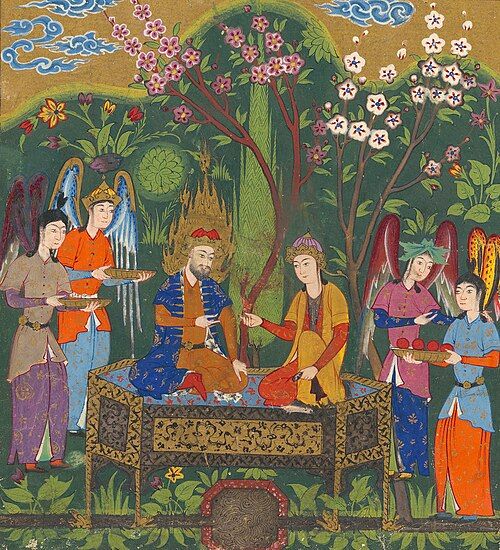
Adam and Eve in paradise (Jannah)
In Islam, the fall of Adam (Ādam) and Eve (Ḥawwā’) occurs through the disobedience of eating from the forbidden tree in Paradise (Jannah), followed by the descent to Earth, where humanity comes to live through its own labor. The Qur’an does not specify the type of tree or fruit, but various traditions frequently associate it with wheat (or grain/cereal), a staple food whose production process requires constant labor and takes a long time to complete. And this symbolizes the beginning of agriculture as a means of sustenance.
On Earth, Adam and Eve learn to cultivate the land, raise animals, and build a dwelling. Traditions (including popular accounts and epics such as the Bengali Nabi Bansa) say that Gabriel taught them to plough, sow, cultivate wheat, and perform other activities important to life on Earth. Man’s survival, from the fall of Adam onward, comes to be sustained by his own labor, and not by Allah, who gave them food and a good life without demanding any effort.
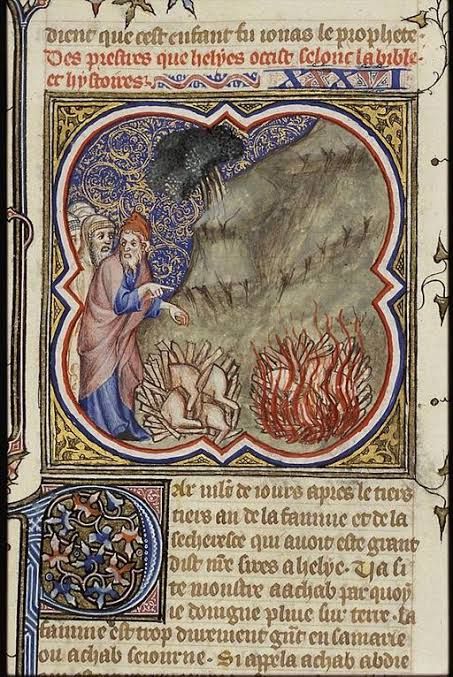
Christian Bible
In the Hebrew Bible (Old Testament), Baal appears as the principal rival of Yahweh and as a symbol of idolatry. In the New Testament, the form Beelzebub (or Beelzebul) appears as a designation of the “prince of demons” (Matthew 12:24; Mark 3:22), consolidating the demonization of the name. Baal is cited between 90 and 100 times in the Bible. The god Baal symbolized everything that Israelite monotheism considered abominable, yet there was still syncretism between Baal and Yahweh: Yahweh, originally associated with desert traditions, with war and liberation, came to absorb characteristics of Baal in order to respond to the needs of sedentary life: rain, the fertility of the land, and agricultural prosperity. There were even Jews who called Yahweh Baal.
Baal Hammon’s Head
In the Middle Ages, Baal (or Beelzebub) was placed by the Catholic Church as a demon of great power in hell, occupying high hierarchical positions as prince and king. In the grimoires of magic written in the Middle Ages, Baal granted the power of invisibility, and in some sources also wisdom and knowledge of the sciences, favors, and, at times, love. Although he is not associated with abundance, prosperity, and wealth in these grimoires, many associate him with — and perform magical workings with — Baal in order to obtain such things.
Baal’s agricultural prosperity extended into infinite areas. The god who was called upon to open the windows of his celestial castle to bring the rain is now called upon to open his windows to help various people obtain assistance in 1001 branches of prosperity.